
How to Evaluate an LLM Feature Before You Ship It (with a Template)
StackSide
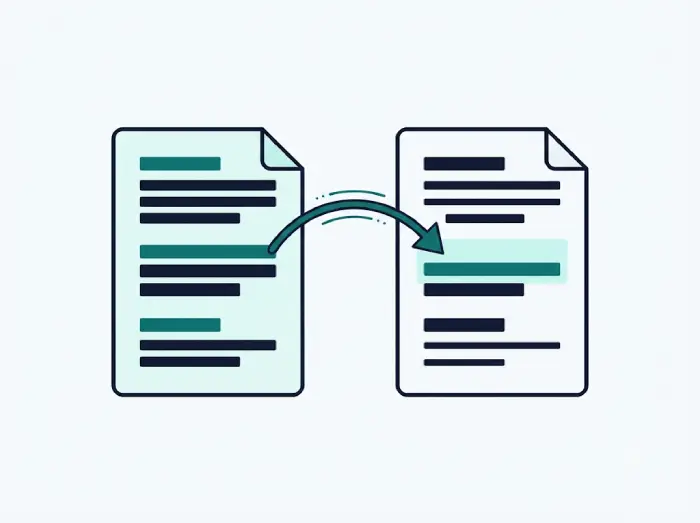
Describe the task as work a person does
“Add an LLM” is not something a reviewer can evaluate. Write down what a person does today, how often, and how many minutes it takes. This site has collected 4 LLM-application posts so far, and 2 of them describe an adoption.
Define the evaluation set before the model
A common approach is to make the model answer a fixed set of examples with known correct answers, and track how the answers change as the prompt or model changes. Meta describes its ad-retrieval work as model and system co-design, so the evaluation has to cover the system around the model, not only the model’s output.
Meta Andromeda: Powering the Next Generation of Ads Retrieval Through Model-System Co-Design
Stack: PyTorch, GPU, CUDA
Keep experiments separate from production adoption
A post that tests whether a model can solve a problem is an experiment, not a production decision. Use such results as background, then measure on your own data before you decide. Write that distinction into the review so no one reads an experiment as a launch.
Plan the wrong-answer path
Even a well-designed system produces wrong answers. Decide who reviews a bad answer, how quickly, and under what condition the feature is switched off. Put those conditions next to the cost and latency targets so the trade-off is visible.
Template (copy)
## 1. The task

- What a person does today, how often, and how long it takes

## 2. Evaluation set

- Examples with known correct answers, and how they were built

## 3. Cost and latency

| Item | Target | Measured | How we check |
|---|---|---|---|
| Cost per request | | | |
| Response latency | | | |

## 4. When the model is wrong

- Who reviews a bad answer, and how
- The condition that turns the feature off

## 5. Rollback criteria

- Quality metric and threshold
## 1. The task

- What a person does today, how often, and how long it takes

## 2. Evaluation set

- Examples with known correct answers, and how they were built

## 3. Cost and latency

| Item | Target | Measured | How we check |
|---|---|---|---|
| Cost per request | | | |
| Response latency | | | |

## 4. When the model is wrong

- Who reviews a bad answer, and how
- The condition that turns the feature off

## 5. Rollback criteria

- Quality metric and threshold
Cases quoted in this guide are compiled automatically from public posts and videos and may contain errors. Check each original link. Read the disclaimer
New cases, once a week
Get newly added topics and cases by email once a week.
Once a week. New topics and cases only. Unsubscribe anytime.
Sign in with Google to subscribe. We store your email, name and profile photo. You must be 14 or older. Privacy policy